
It Was The Night Before Race Day
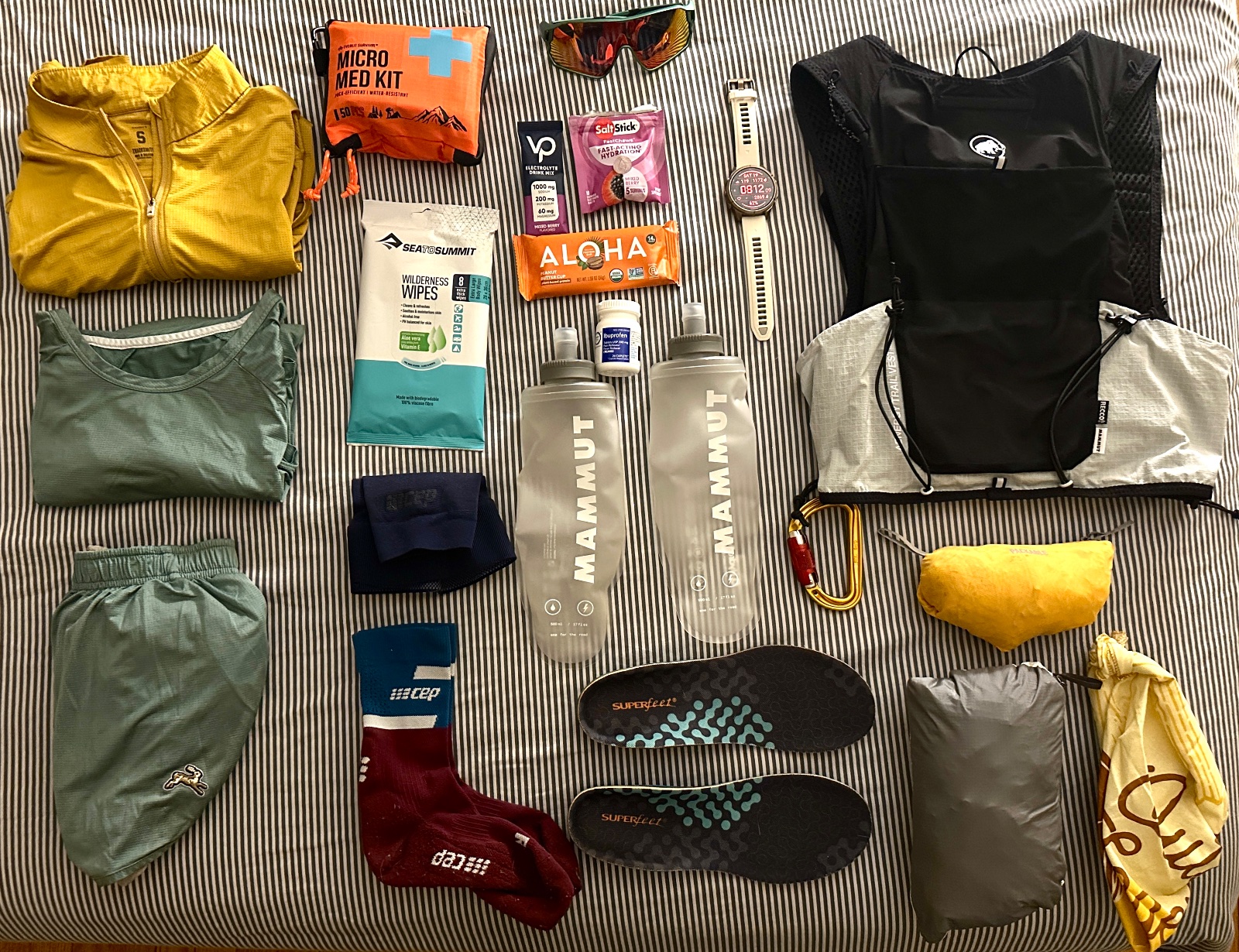
Tomorrow morning is the Wild Goose 13.1, and tonight my bed looks like a gear shop that learned to fold. This is the ritual. Everything I'll wear or carry gets laid out the night before, because the version of me that packs at 8 PM makes better decisions than the version of me that packs at 5 AM.
Here's the whole spread, piece by piece, and the job each thing has to earn its spot.
Why I pack the night before a trail race
A trail race packing list isn't really about the gear. It's about removing decisions from race morning. Every choice you make tonight is one you don't burn willpower on tomorrow, when your brain should be thinking about pacing and coffee and nothing else. The bed layout also gives me one honest look at the pile: if I can't explain why something is there, it doesn't come.
What I'm wearing at the start line
The quarter zip. Mustard, light, and the first thing I'll put on. September race mornings start cold and end warm, so this is the shed layer. It'll be tied off or stuffed in the vest by mile three.
Tee and shorts. The sage kit. Nothing here is new, and that's the point. Every seam has already proven it won't chafe over 13.1 miles, because race day is the worst possible day to learn something about your shorts.
Compression socks. The tall ones handle the race. Compression is one of those things where half the benefit is measurable and the other half is a hug for your calves, and I'll take both.
Superfeet insoles. These slide into my trail shoes and keep my feet from having opinions at mile ten. I've written a whole piece on insoles, but the short version: your feet hit the ground about 20,000 times in a half marathon, and a stable platform is cheap insurance.
Garmin, charged. The watch face says Saturday and 62 percent, which means it goes on the charger tonight. A dead watch at mile eight is a special kind of grief.
Sunglasses. Mirrored, because golden hour on an open ridge is beautiful right up until it's blinding.
What rides in the hydration vest
The vest itself. A Mammut trail vest with a RECCO reflector built in. It carries everything below and disappears once it's on, which is the entire job description of a running vest.
Two 500 ml soft flasks. One water, one mixed with electrolytes. Soft flasks ride in the front straps, don't slosh, and collapse as you drink.
Electrolyte drink mix. The sachet in tomorrow's flask carries 1,000 mg of sodium, plus potassium and magnesium. A half marathon on trails takes longer than its road cousin, and sodium is the thing sweat actually steals.
SaltStick FastChews. Backup electrolytes I can take without unscrewing anything. Chewable, fast, and they live in the front pocket where fumbling isn't required.
An ALOHA peanut butter protein bar. Real food for the back half. Gels have their place, but 14 grams of protein at the finish line is how the recovery starts before the car ride home. I know that this specific race will have PLENTY of fuel at the aid station so with a good breakfast I'm not concerned about the mid race fueling. I'll be able to grab some at the aid station.
A micro med kit. Fifty pieces, water resistant, smaller than my phone. Blister care, tape, and bandages. In eight years of trail racing I've opened it maybe four times, and all four times it was the most important thing I was carrying.
A CEP knee sleeve. Insurance. If my knee starts a conversation at mile nine, this comes out of the vest and joins the race. Compression will not fix a real injury, but it adds warmth and stability, and sometimes that is the difference between finishing strong and limping it home.
Ibuprofen, with a rule attached. It rides in the kit for after the finish line, never during the race. Pain relievers and hard endurance efforts are a bad combination for your kidneys, so mid-race pain gets managed the old fashioned way: slow down, assess, be honest.
Sea to Summit Wilderness Wipes. Biodegradable, and the difference between a pleasant drive home and a two hour negotiation with your own car seats.
A locking carabiner. For clipping shed layers to the vest, hanging the pack at the trailhead, and the dozen small jobs a carabiner invents for itself. Lightest multi-tool I own.
A bandana. Sun cover, sweat management, and an emergency everything-cloth. It weighs nothing and earns its spot every single race.
The 6 AM decision
The two stuff sacks stay packed until morning: a Patagonia rain shell and an REI packable windbreaker. One of them comes with me and the forecast picks which. Rain in the forecast means the shell. Just wind and cold means the windbreaker. Carrying both is how you end up racing with a closet on your back, so the decision waits for the morning sky and gets made in ten seconds.
What's not on the bed
No new shoes, no new fuel, no gear making its race debut. The oldest rule in racing is nothing new on race day, and the bed layout is where that rule gets enforced. Everything in this photo has miles on it already. Tomorrow it just gets 13.1 more.